- Who We Are
-
What We Do
- Helping Children
- Strengthening Families
- Building Community
- Get Involved
Share



Maybe you want counseling, but your partner isn't sold on the idea. This happens a lot. And it doesn't mean your relationship is doomed. It just means you need a different approach.
Here's how to open the conversation, work through common objections, and understand what therapy actually looks like when one partner starts out unsure.
Before you bring up therapy, get curious about your partner's hesitation. Try asking:
"What concerns you most about couples therapy?
"Have you had a bad experience with counseling before?
"What would make therapy feel safe for you?"
These questions open a door instead of starting a fight.
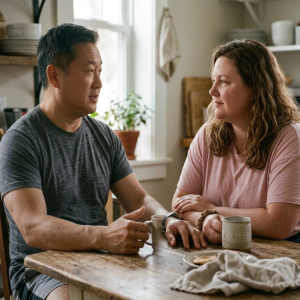
Shift the conversation toward shared goals. You might ask:
"Can we agree we both want a healthier relationship?"
"What do you hope things look like a year from now?"
"What's one thing we're already doing well?"
Skip the blame. Use "I" statements instead:
"I feel disconnected and want help rebuilding our connection."
"I'm not looking for someone to take sides. I want support for both of us."
"Therapy won't work."
Ask: "What would success look like for you if it did help?"
"We should fix this ourselves."
Try: "Sometimes a guide helps us learn skills nobody taught us."
"The therapist will blame me."
Explain: "A good couples therapist looks at patterns, not blame."

Here's one way to say it:
"I know you're hesitant about couples therapy, and I respect that. I don't see it as figuring out who's wrong. I see it as getting help with something important to both of us. I'd like to understand your concerns and find a way this feels comfortable for you."
A skilled therapist doesn't take sides. Instead, they focus on the pattern that keeps a couple stuck. Early in therapy, a resistant partner might hear questions like:
"You don't have to agree with therapy for us to have a useful conversation."
"Tell me your perspective on what's been happening."
"What have you already tried to improve things?"
The goal isn't to prove anyone wrong. It's to understand what's happening between you and find a new way forward.
If your partner is hesitant, you don't have to be the one to change their mind. A trained therapist knows how to build trust with a skeptical partner and create a space where both people feel heard.
Call (833) 208-3201 for a free consultation or Schedule An Appointment with one of our licensed therapists today.

 View All