- Who We Are
-
What We Do
- Helping Children
- Strengthening Families
- Building Community
- Get Involved
Share


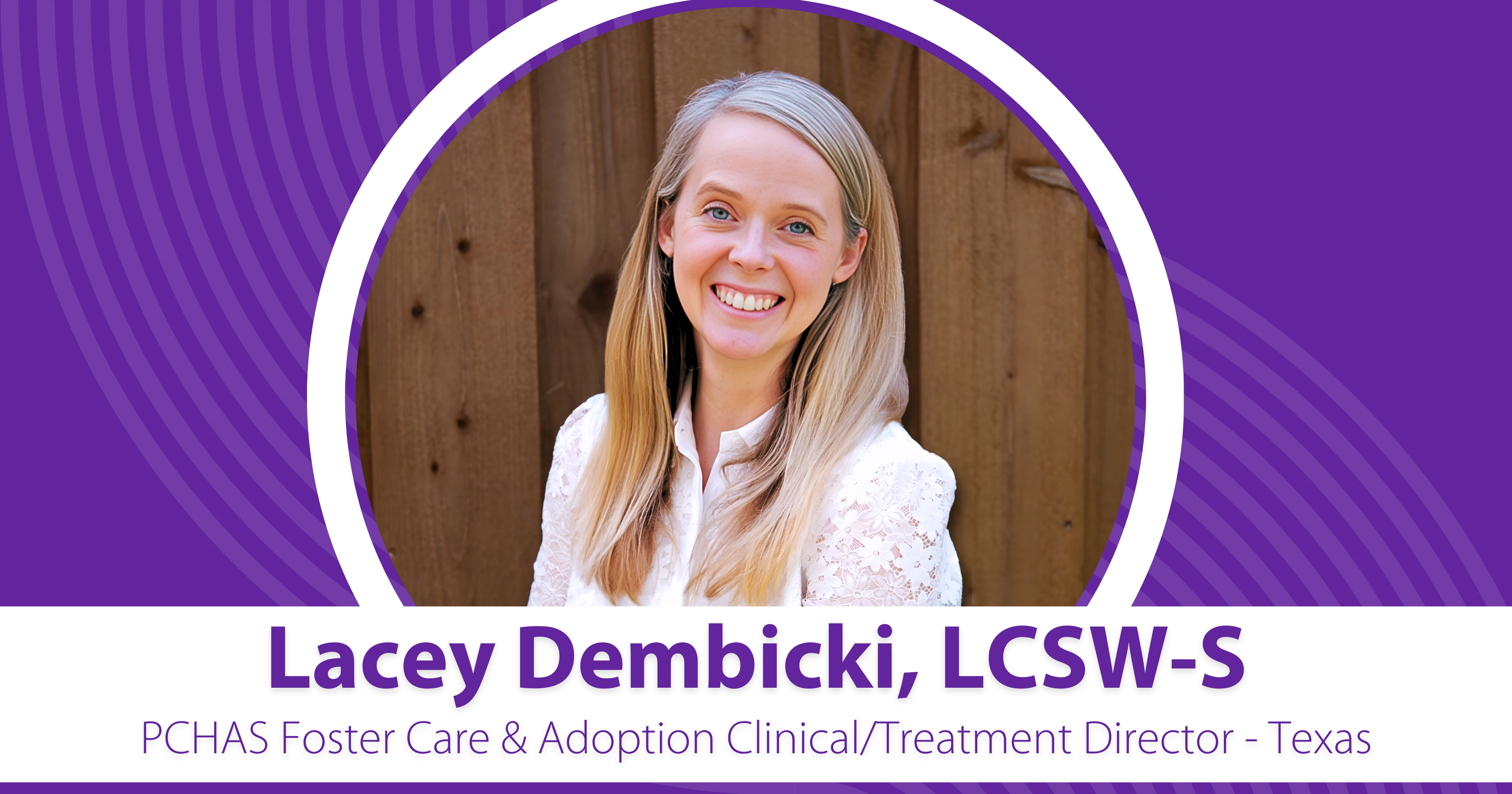
National Social Work Month gives us a chance to recognize the dedicated professionals who walk alongside some of the most vulnerable members of our communities. So, we’re eager to introduce you to on Lacey Dembicki, the Clinical/Treatment Director for the PCHAS Foster Care & Adoption program in Texas.
A Path Shaped by Purpose
Lacey earned a bachelor's and master's degree in Social Work from Baylor University. It was there that a professor named Pam Crawford — who happened to work at PCHAS — invited her to volunteer at a Trust-Based Relational Intervention® (TBRI®) camp. That experience changed everything.
"I volunteered and knew then I wanted to use TBRI in my career moving forward," Lacey recalls.
After graduate school, she joined a Court-Appointed Special Advocate (CASA) program in Bryan-College Station, where she quickly rose to Program Coordinator for a mentoring initiative serving youth aging out of foster care. A move brought her to CASA of Collin County and gave her the opportunity to complete the training to become a TBRI® Practitioner. She believed in the model and knew her next step would include working directly with foster and adoptive families.
That instinct led her to PCHAS in 2018. She joined the team in the Dallas/Fort Worth Metroplex as the Home Development Coordinator and grew through various roles within the organization, gaining the clinical supervision hours needed to become a Licensed Clinical Social Worker (LCSW). After a brief detour into outpatient therapy, she returned to PCHAS as Foster Care Clinical/Treatment Director, where she now oversees the mental and behavioral health services for children in a specialized foster care service package.
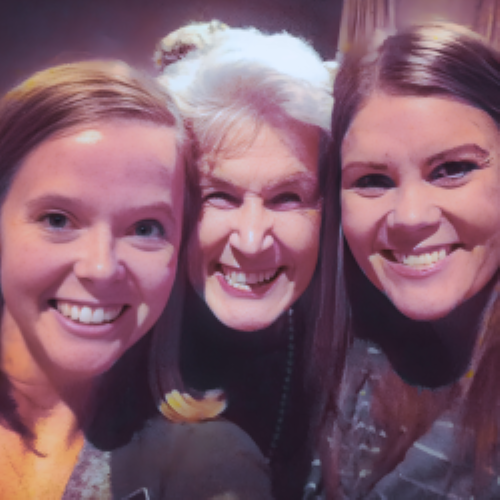
Lacey Dembicki, LCSW (left) and Ashley Pruitt, LCSW-S, Postpartum Specialist and Early Childhood Supervisor with PCHAS Growing Together pictured with the late Dr. Karyn Purvis (namesake of the Karyn Purvis Institute of Child Development at Texas Christian University and creator of Trust-Based Relational Intervention) at TBRI Practitioner Training in 2014.
Supporting the People Who Do Heavy Work
Supporting a clinical team means helping foster and adoptive families access the resources needed to help kids heal, and it means helping staff carry the emotional weight that comes with this work. Lacey is candid about the reality social workers face.
"The work is heavy," she says. "The truth is, 'handling the weight' of the work is a skill you learn and grow in."
She encourages staff with three principles she lives by herself. First: remember your role. Whether that means staying in your lane as part of a clinical team or, as a person of faith, releasing the things beyond your control — good boundaries make better helpers. “There are distinct moments where I have to remind myself that God is God and I am not," she reflects.
Second, lean on faith. Lacey draws on the spirit of the Serenity Prayer, seeking wisdom to know what she can change and the peace to release what she can't.
Third, practice real self-care. "Self-care doesn't change your circumstances, but it changes your capacity to approach those circumstances," she says. "When your job is emotionally draining, it's important to practice what you preach to your clients."
What the Families Have Taught Her
Ask Lacey which population has shaped her the most, and she doesn't hesitate: young adults who spent time in foster care.
"What these young adults have taught me is that people are resilient and healing is possible, albeit a process," she says.
That insight has fundamentally shaped how she approaches clinical leadership. The most meaningful progress, she's learned, rarely comes from what a social worker brings to the table — it comes from the client's own internal strengths and the naturally occurring support systems around them.
"My job is to help them discover those strengths," Lacey explains. "And when I take that approach, it leads to a lot more joy and hope — in the client and in me."
A Degree She Uses Every Day
Lacey is quick to credit her social work education as the foundation for everything she does in her role today — not just the clinical knowledge, but the bigger-picture perspective.
"A social work degree not only prepared me to have a clinical understanding of a diagnosis or treatment plan, but it helps me see the larger systems at play," she says. Even the best therapy, she notes, can't fix broken systems on its own. Her training equipped her to advocate at every level — clinical, programmatic, and policy — on behalf of the children and families PCHAS serves.
"I'm grateful to be in this field and grateful to work at a place where I get to use my degree every single day."
Lacey is passionate about ensuring kids in foster care have safe, loving families and access to everything they need to heal. She cares deeply about young adults who aged out of foster care, too.
If these things resonate with you, we invite you learn more about ways to help Texas kids in foster care.
Join An Online Info Session to learn how it all works, or contact us at (281) 324-0544.

 View All